By
By 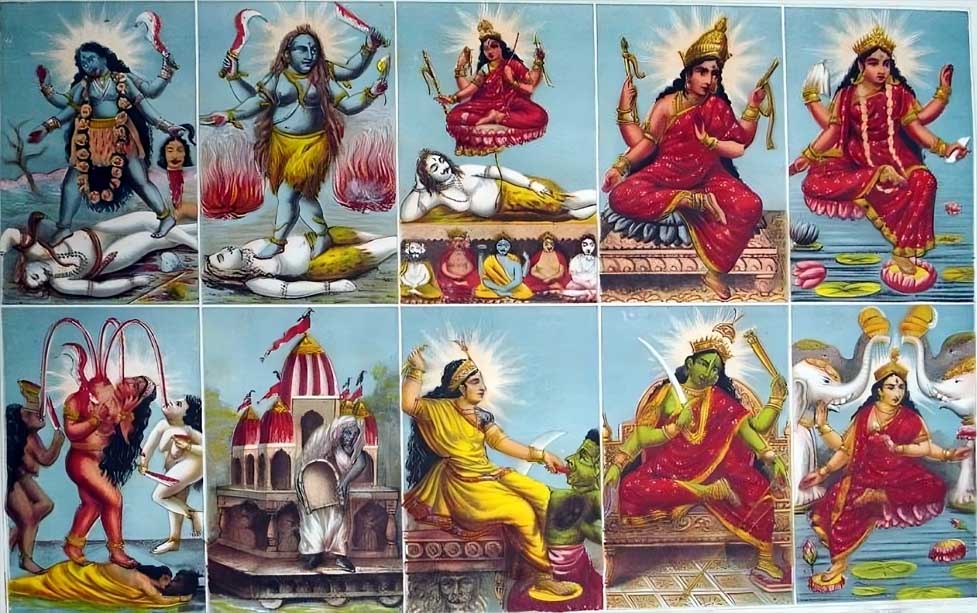
No time for reading the blog? Give it a listen on Spotify.

Gupta Navratri (19 January to 28 January) is a sacred time for quiet inner worship, where the focus shifts from outer celebration to inner transformation.

Gupta Navratri is not about visibility. It is about intensity. This quieter Navratri unfolds for those drawn to inner work rather than outward celebration. Gupta means hidden, and everything about this period reflects that spirit. The worship is inward. The discipline is subtle. The transformation is real.
These nine nights are dedicated to the Dasha Mahavidyas, the ten Tantric forms of the Divine Mother. Each Mahavidya is a complete spiritual system in herself, with a specific mantra, yantra, and sadhana. As these energies awaken, the sadhak may encounter disruptions, emotional churn, fear, or confusion. These are not obstacles. They are thresholds.
The instruction remains constant: do not cling to experiences. Keep moving inward.
The Mahavidyas, Their Powers, and Their Consorts
Each Mahavidya is paired with a corresponding consort, representing how Shakti expresses herself through consciousness. Together, they show that power without awareness is chaos, and awareness without power is inert.
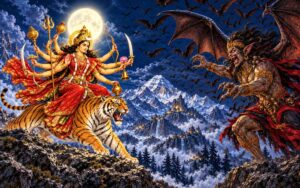
Maa Kali
Power: Time, destruction, ferocity, ultimate truth
Consort: Lord Shiva as Mahakala
Kali dissolves illusion. Shiva provides stillness. Time meets timelessness.
Maa Tara
Power: Speech, sound, guidance, protection
Consort: Lord Shiva as Akshobhya Bhairava
Tara gives voice to wisdom; Shiva anchors it in silence.
Maa Tripurasundari (Shodashi)
Power: Bliss, beauty, harmony, realization
Consort: Lord Shiva as Kameshwara
Desire refined into divine union. Beauty aligned with awareness.
Maa Bhuvaneshwari
Power: Vision, space, cosmic expansion
Consort: Lord Shiva as Tryambaka Bhairava or Bhuvaneshwara
She is the field; he is the witness within that vastness.
Maa Chhinnamasta
Power: Ego destruction, sacrifice, shock
Consort: Lord Shiva as Kabandha Bhairava (a headless form of Shiva)
She cuts illusion; he sustains consciousness beyond identity.
Maa Dhumavati
Power: Ignorance, loss, void, detachment
Consort: None (widowed aspect of Shiva)
Her aloneness teaches that truth remains even when all support disappears.
Maa Bagalamukhi
Power: Stoppage, control, obstruction of negativity
Consort: Lord Shiva as Ekavaktra Maharudra Paramashiva
She freezes harmful forces; he stabilizes awareness.
Maa Bhairavi
Power: Discipline, restraint, tapas
Consort: Lord Shiva as Bhairava
Fire meets focus. Energy is shaped into sustained practice.
Maa Matangi
Power: Playfulness, creativity, unconventional wisdom
Consort: Lord Shiva as Matanga Bhairava
Sacred knowledge flows beyond social boundaries.
Maa Kamala
Power: Purity, abundance, spiritual fulfillment
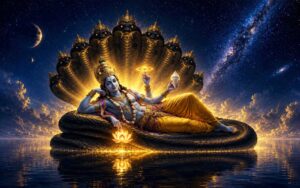
Consort: Lord Vishnu
Shakti rests in balance, prosperity, and sattvic clarity.
One Inner Truth Behind the Ten Forms
What this really means is simple and profound.
The Dasha Mahavidyas represent the ten sense organs and the total receptive capacity of a human being.
Five organs of perception (Jñānendriyas): Eyes – sight; Ears – hearing; Nose – smell; Tongue – taste; Skin – touch.
Five organs of action (Karmendriyas): Mouth (speech); Hands – grasping; Feet – movement; Genitals – creation and pleasure; Anus – elimination.
Together, these ten govern how a human being receives, processes, and acts in the world — which is why the Dasha Mahavidyas are seen as the powers that purify, expand, and master the full receptive and expressive capacity of the individual.
Dasha Mahavidyas are not external deities to be acquired. They are internal powers to be recognized, purified, and integrated.
This is why a guru is indispensable during Gupta Navratri. Without guidance, a sadhak can easily mistake psychic noise for realization and lose direction. With guidance, even difficult experiences become stepping stones.
The Real Aim of Gupta Navratri
Not siddhis.
Not visions.
Not stories to tell.
The aim is singular: to experience Maa Kali within — the force that strips away fear, time-bound identity, and illusion.
Gupta Navratri opens that doorway quietly. Only those willing to walk inward will notice.
Jai Maa Kali.