The origin of the Avadhoot avatar begins at a time when divine power quietly turned into pride. After many victories over chaos and demons, Lord Indra, the king of the gods, began to believe that authority itself made him supreme. Praise surrounded him, obedience followed him, and slowly he forgot that power is entrusted, not owned.
This imbalance disturbed the cosmic order, and Shiva, the eternal guardian of balance, chose to intervene. Not with destruction, but with awareness.
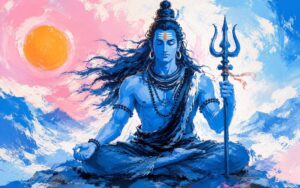
To teach this lesson, Shiva assumed the form of an Avadhoot: a sage beyond identity, status, and fear.
His body was ash-smeared, his appearance simple and unsettling. He carried no weapons, wore no ornaments, and displayed no signs of authority.
This form was deliberate, because the Avadhoot represents a truth ego refuses to accept: real power does not demand recognition, and true freedom cannot be commanded.
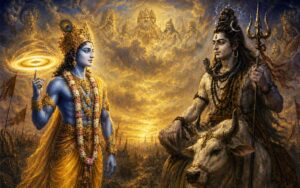
As destiny unfolded, Indra and the other gods were passing near Mount Kailash, Shiva’s eternal abode. Their path was suddenly blocked by a lone ascetic standing silently in the way. Indra ordered the sage to move aside.
The Avadhoot did not respond. The command was repeated with greater authority, yet the ascetic remained completely unmoved. Frustration turned into anger. Indra used his full strength and divine might, but the sage did not shift even slightly.
In that unmoving silence, a deeper realization dawned. Indra understood that all his power was useless against someone who had nothing to defend and nothing to prove. His pride shattered. The illusion of supremacy collapsed. At that moment, the ascetic revealed his true form. Divine radiance filled the space, the heavens trembled, and Indra realized that the Avadhoot before him was none other than Lord Shiva himself.
Shiva did not punish or rebuke Indra. The lesson had already been delivered. Through stillness, Shiva had shown that ego collapses on its own when faced with truth. He revealed that titles fade, authority passes, and identity dissolves, but awareness alone remains eternal. The Avadhoot avatar exists to remind both gods and humans that liberation begins where ego ends.
In this form, Shiva wanders cremation grounds and forests, untouched by praise or insult, comfort or discomfort.
The Avadhoot is Shiva in his purest expression—unbound, undefined, and free. Whenever pride rises too high, Shiva appears not as a conqueror, but as silence itself.

 By
By 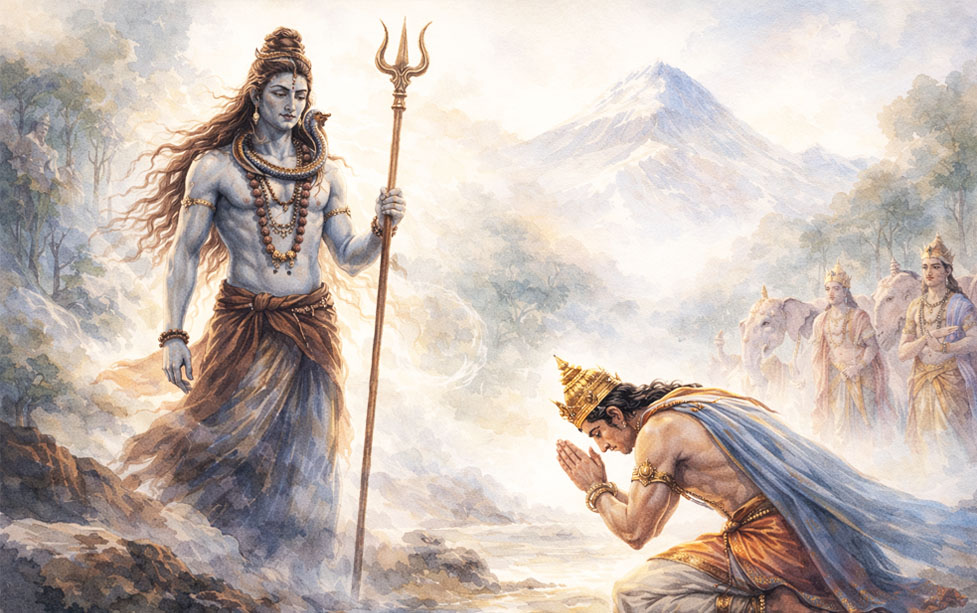



Take away the ego, and all that remains is divine 🙏