By
By 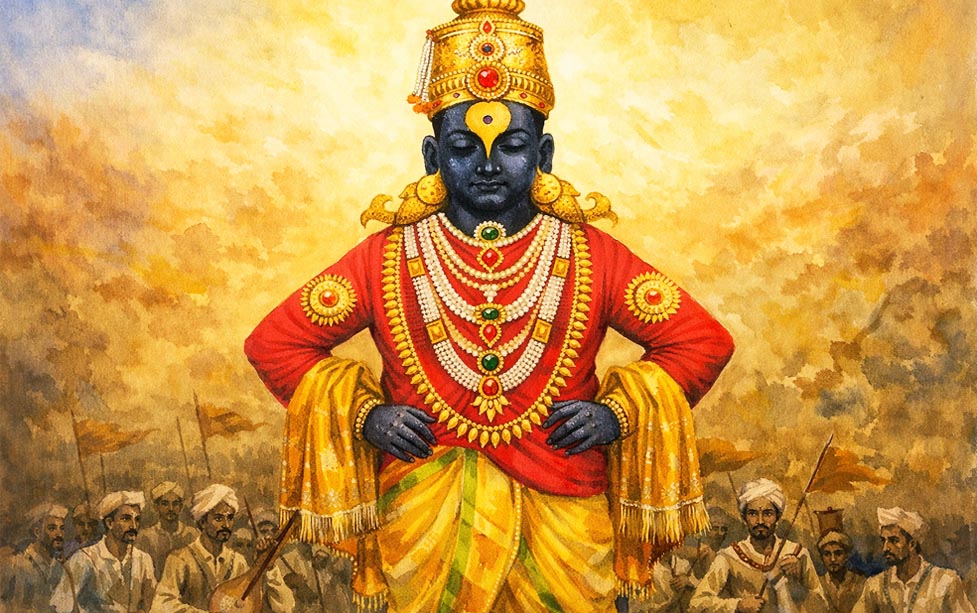
No time for reading the blog? Give it a listen on Spotify.

Vithoba’s silent posture tells a story of devotion, patience, and a god who chose to wait rather than be worshipped.
In Pandharpur, before devotees notice the crown or the garland, they notice the stance.
Vithoba does not recline like Vishnu.
He does not dance like Krishna.
He does not sit in meditation.
He stands—upright, still, grounded—with his hands resting firmly on his waist.
This posture is not decorative. It is the story.
A god who came to witness devotion
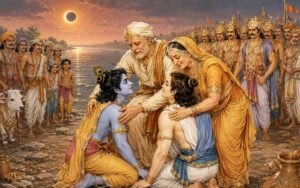
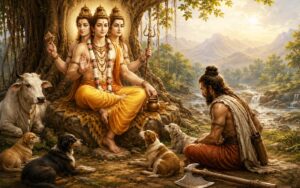
Vithoba did not come to Pandharpur to demand worship or display power. He came because something had changed. Pundalik, once absorbed in comfort and careless toward his parents, had undergone a quiet transformation. Realizing his failings, he turned fully toward seva, devoting himself to caring for his aging mother and father with humility and love.
Moved by this rare devotion—where duty itself had become prayer—Vithoba arrived to bless him. He did not come to a temple or a court, but to an ordinary home, where compassion was already being practiced.
When Vithoba arrived, Pundalik was in the middle of serving his parents. He did not rush out or interrupt his duty. He asked the god to wait for a moment and offered him a simple brick to stand upon.
The full story of Pundalik’s devotion and transformation is told in detail here. What matters here is not why Vithoba came—but what happened when he did.
A god who chose to wait
Vithoba did not leave. He stood.
The wait stretched. Time lengthened. Stillness became effort. His legs grew tired. And slowly, almost instinctively, the god placed his hands on his waist—the way a man does when standing for long, the way villagers do when waiting outside a house.
That single, unguarded movement became permanent.
Why the posture never changed
In folk belief, divine forms are shaped by lived moments, not intention. Vithoba did not assume this stance to teach a lesson. He assumed it because he was waiting.
When Pundalik finally emerged and fell at his feet, Vithoba could have stepped away. He could have changed form. He did neither.
He stayed on the brick. He kept his hands where they were.
The posture had already spoken.
What the hands on the waist truly mean
This is not a stance of authority. It is a stance of patience.
Hands on the waist say:
“Finish what you must.”
“I am not offended.”
“I will wait.”
Vithoba holds no weapons here. He offers no commanding gesture. His hands rest where human hands rest when time demands endurance.
That is why devotees say Vithoba understands delay better than any other god.
A posture that mirrors his people
Farmers recognize this stance. So do laborers, pilgrims, parents, and those who wait without complaint.
In this posture, Vithoba looks less like a ruler and more like someone standing beside them—sharing the weight of time.
Pandharpur preserved this form because it felt honest.
A god who does not hover above life. A god who stands inside it.
The story of Pundalik explains why Vithoba waited. The posture explains how deeply he accepted it.
Once, a god waited long enough for his body to remember the moment. And he chose never to undo it.