By
By 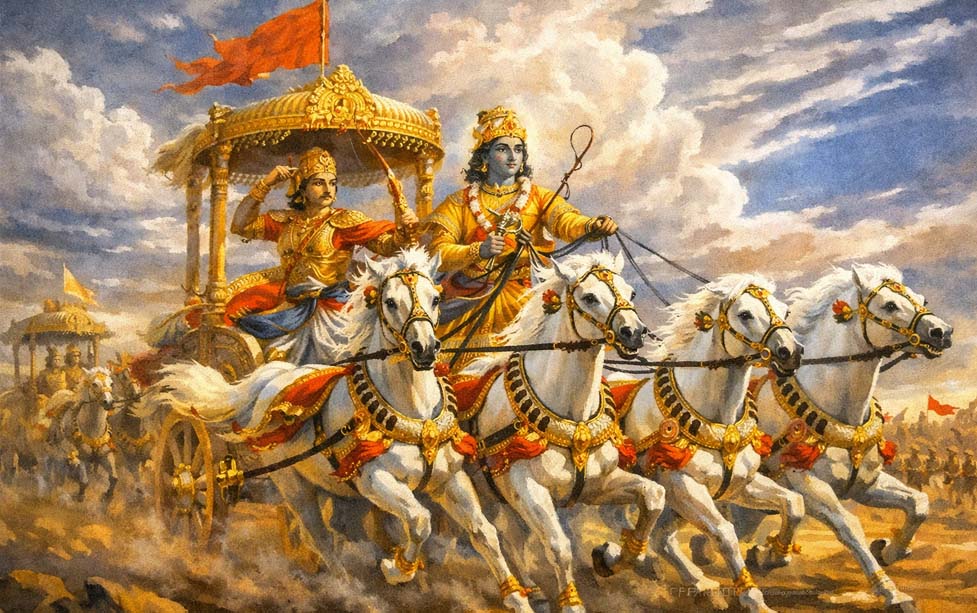
Listen to the podcast on Spotify for a deeper dive into this blog.

Across the epics and Puranas, destiny moves like a tide — but the question is whether the heroes swim with it, against it, or consciously through it.
There’s a tension that runs quietly through our epics and Puranas. If everything unfolds according to cosmic design, then what exactly are the heroes choosing?
Are they actors reading from a divine script? Or are they conscious co-creators inside a larger rhythm?
Let’s examine three lenses.
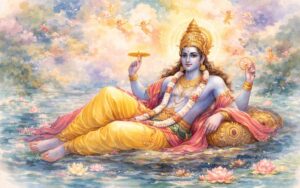
Krishna: The One Who Knows — Yet Leaves the Choice
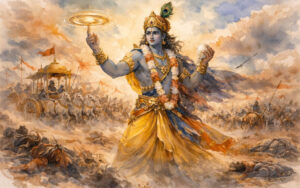
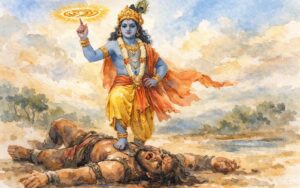
In the Mahabharata, Krishna understands that the war of Kurukshetra is no accident. The forces leading to it have been building for generations — ambition, insult, broken vows, unchecked ego. He attempts peace repeatedly. He negotiates. He warns. But when reconciliation fails, he does not stop the war.
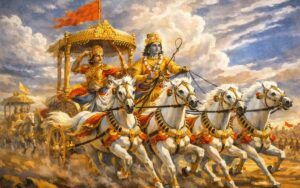
Instead, he becomes Arjuna’s charioteer.
This is where the tension sharpens. If Krishna knows the war must unfold, why teach at all? Why deliver the Gita?
Because inevitability at the cosmic level does not eliminate responsibility at the human level.
Arjuna collapses in confusion. He questions duty, violence, morality, consequence. Krishna does not command him to fight. He unfolds knowledge — about action, detachment, dharma, and the nature of the self — and then says, in essence: reflect fully, and act as you choose.
The war may be destined. Arjuna’s participation is not automatic.
Destiny sets the stage. Choice determines alignment.
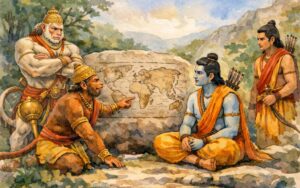
Rama: Acceptance as Strength
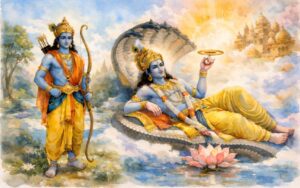
In the Ramayana, Rama’s exile unfolds through palace intrigue and Kaikeyi’s demand. The narrative frames it as destiny — the unfolding of a larger design.
But look closely. Rama is not forced into emotional surrender. He responds deliberately.
He could contest the decision. He could rally support. Ayodhya would likely stand behind him. Instead, he chooses to honor his father’s word and accept exile.
That choice defines him.
The event may be outside his control. His inner response is not. Rama demonstrates that freedom is not always about altering circumstances; sometimes it is about shaping the ethical tone of how circumstances are lived.
He does not resist destiny. He embodies it with clarity.
The Larger Frame: Cycles Beyond the Individual
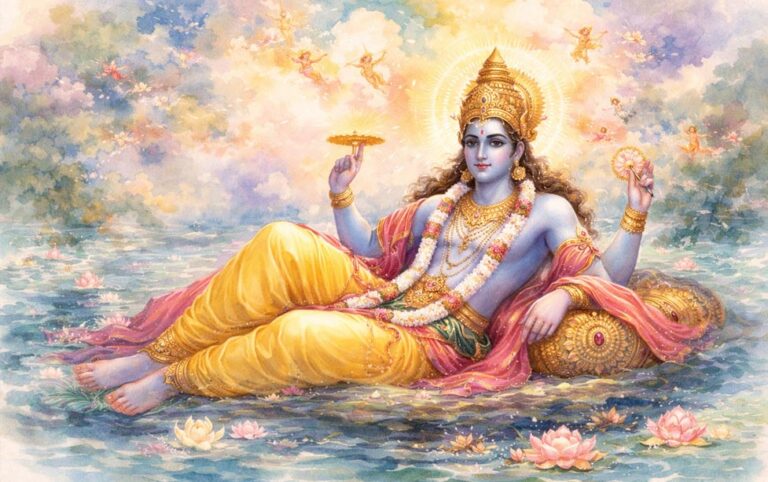
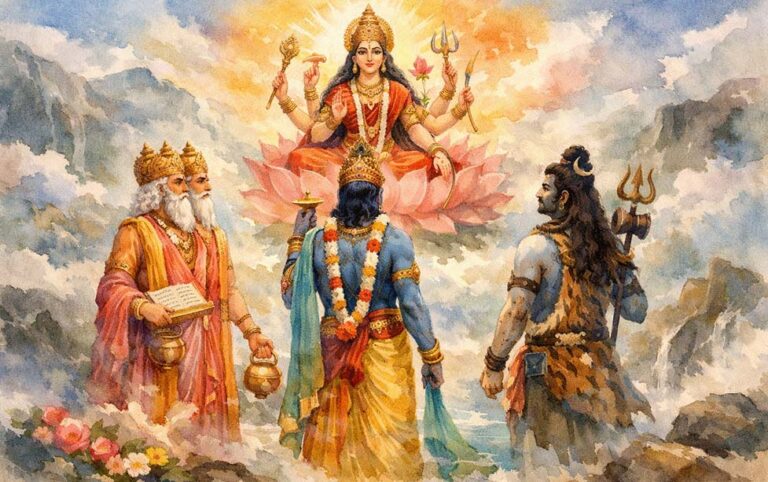
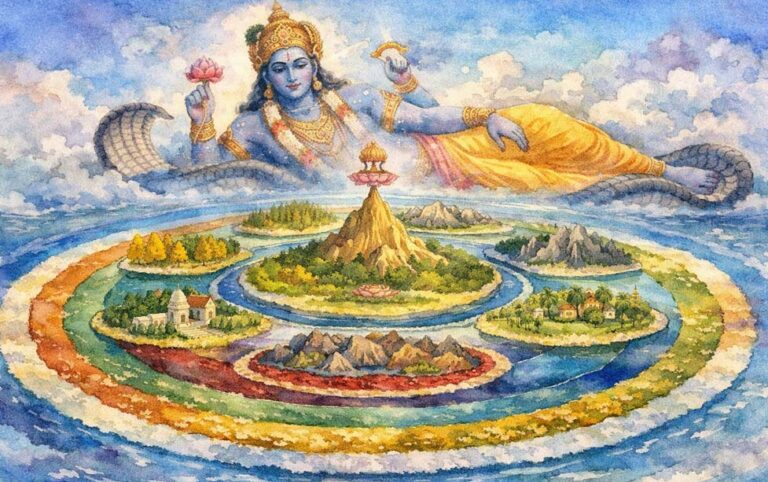
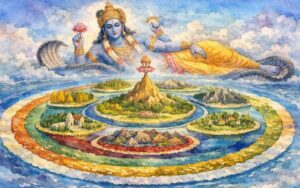
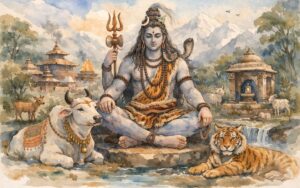
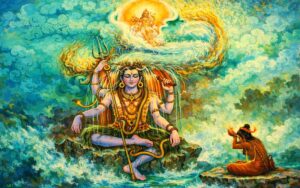
The Brahmanda Purana describes immense cosmic cycles — yugas, kalpas, dissolutions, recreations. Creation is rhythmic, not linear. Civilizations rise and fall as part of vast, recurring patterns.
Within this framework, events like wars, exiles, and upheavals are not anomalies. They are part of cosmic recalibration.
At that level, the structure is fixed. Winter comes whether we invite it or not.
But within the season, there is agency.
You may not choose the age you are born into. You may not prevent the turning of cycles. Yet you decide how you act inside them. Karma accumulates not because events happen, but because of how consciousness engages with them.
The macro-pattern may be determined. The micro-response is alive.
So Are They Free?
Not free to cancel destiny. Free to interpret and embody it.
Krishna does not halt the war. Rama does not avoid exile. The cycles described in the Puranas do not pause for preference. But in every case, the hero’s inner alignment remains voluntary.
The epics suggest that fate governs circumstances, while free will governs character.
You may not control the battlefield. You control how you stand upon it.
Fate may script the era, but freedom scripts the soul.
And in that quiet space between inevitability and response, true heroism is born.