By
By 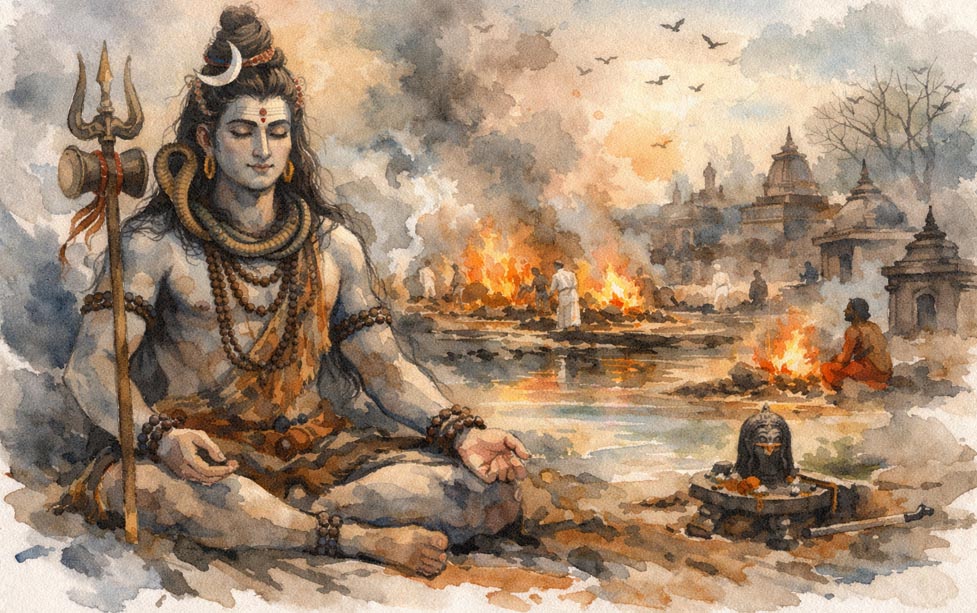
Tune in on Spotify for a deeper exploration of this blog.

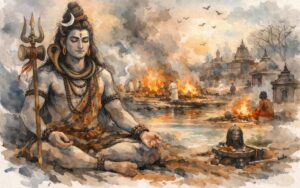
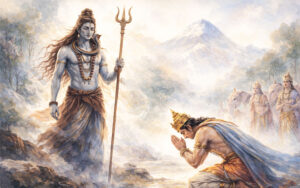
While most deities dwell in celestial realms, Shiva chooses the cremation ground which is a haunting symbol that reveals the deepest truths about life, death, and liberation.
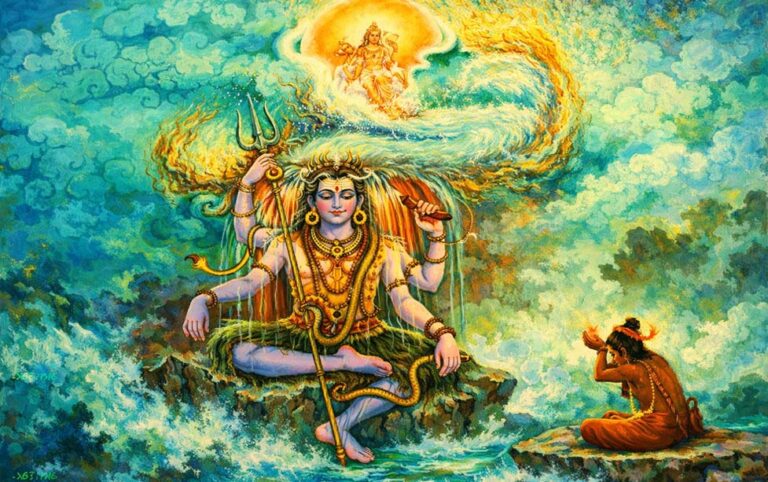
In the Shiva Purana, Shiva is described as Smashanavasi — the one who resides in the cremation ground (smashana). He wears ashes from funeral pyres, adorns himself with skulls, and sits in deep meditation amid burning bodies.
This imagery isn’t random. It is deliberate spiritual symbolism.
The Cremation Ground Represents Ultimate Reality
In a palace, identity thrives. In a cremation ground, identity ends. Titles disappear. Wealth burns. The body returns to ash.
Shiva chooses the one place where ego has no footing. What this really means is: truth reveals itself only when illusion is stripped away.
The cremation ground is where maya dissolves.
Ashes as a Symbol of Impermanence
Shiva smears his body with vibhuti — sacred ash. Ash is what remains after everything else is gone. It cannot be destroyed further. It is the final state of material existence.
By wearing ash, Shiva teaches:
Everything material is temporary
The body is not the Self
Liberation comes from detachment
It’s not morbid. It’s liberating.
Shiva as the Lord of Transformation
Cremation is not annihilation. It is transition. Shiva is called Mahakala — the Lord beyond time. In the cremation ground, he stands at the boundary between life and rebirth.
Death, in Shaiva philosophy, is simply a doorway. He does not fear death because he governs it.
Destroyer of Ego
The skull garland (mundamala) around Shiva’s neck represents past lives, identities, and egos that have been shed.
The cremation ground is where the final illusion — “I am this body” — burns away.
Shiva resides there to remind seekers: if you want liberation, you must confront what you avoid.
Compassion for the Abandoned
There’s another layer most people miss. The cremation ground is where society leaves the body and walks away. Shiva stays.
He is present where others withdraw.
In this sense, Shiva is not terrifying. He is compassionate. He remains with the soul through its final earthly transition.
Aghora – The Fearless Aspect
In the Shiva Purana, Shiva’s form as Aghora represents that which is “not terrible.” What appears frightening is simply misunderstood.
The cremation ground frightens us because it forces us to face impermanence. Shiva sits there calmly because he has transcended it.
Fear exists only where attachment exists.
Philosophical Insight
The cremation ground is not just a physical location. It is a metaphor for the mind emptied of desire.
When all cravings burn away, what remains is pure awareness.
That awareness is Shiva.
Shiva does not live in cremation grounds because he loves death.
He lives there because he is beyond it.
Among ashes and silence, he teaches the most powerful lesson of all: everything that can be taken from you is not truly you.
And what cannot be burned — that is eternal.