By
By 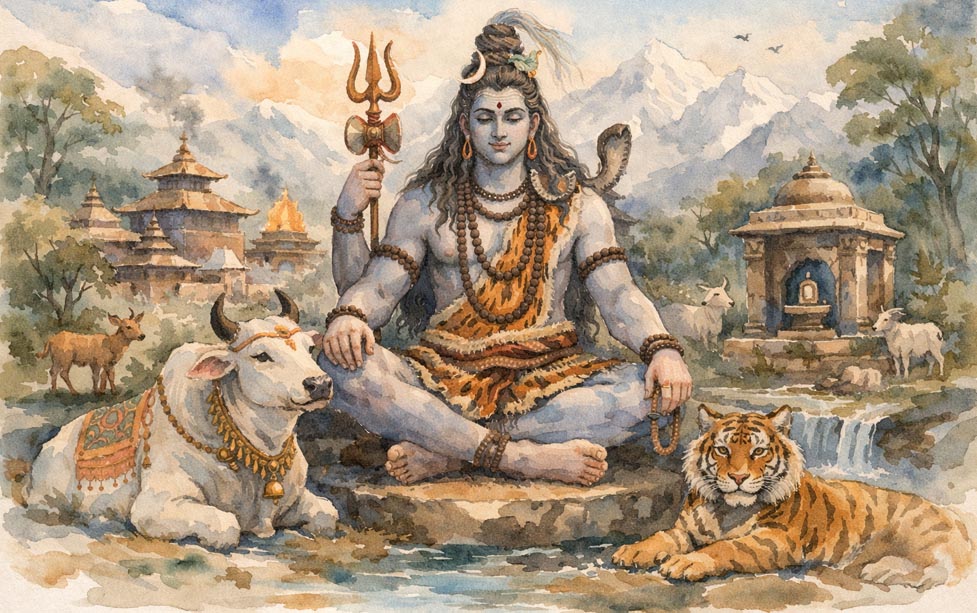
Tune in on Spotify for a deeper exploration of this story.

From the earliest whispers of the Vedic age, Shiva manifested as Pashupatinath — the primordial Lord of all beings, sovereign over every creature and every bound soul.
Characters in the story:
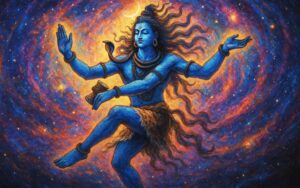
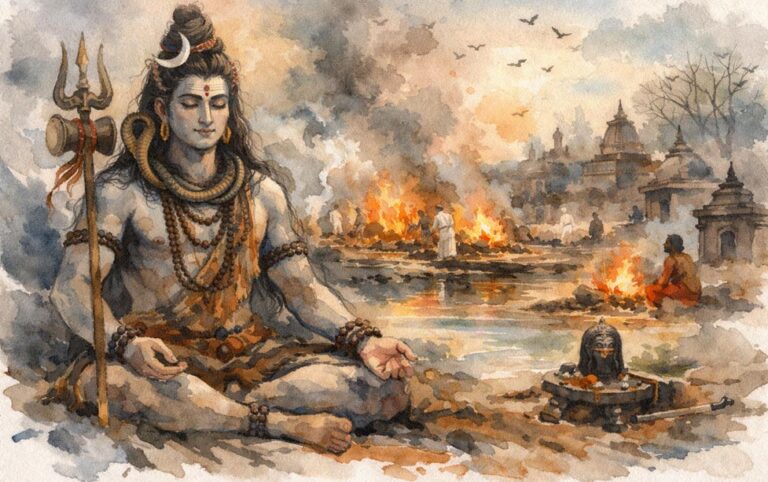
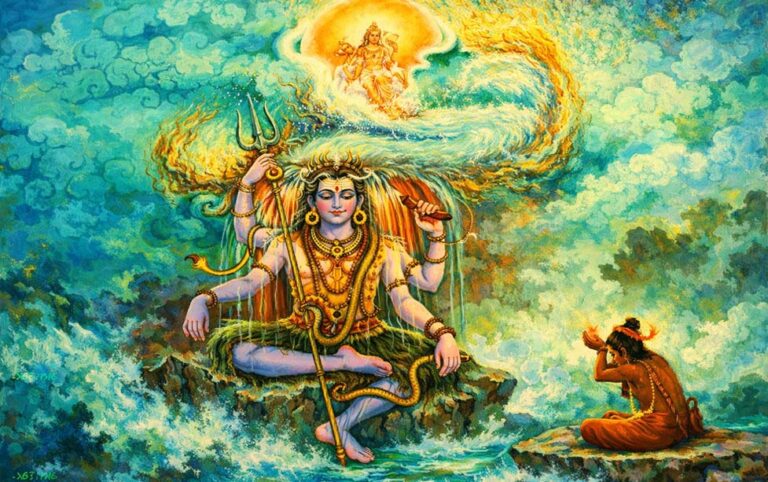
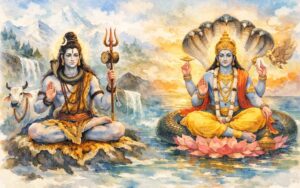
Lord Shiva: Lord Shiva, a major deity in Hinduism, is revered as the destroyer of evil and the force of cosmic change. He is depicted as a meditative ascetic or a divine dancer, characterized by his third eye, a serpent around his neck, and a trident in his hand.

The name Pashupatinath means Lord of all beings — “Pashu” meaning living creatures and “Pati” meaning master or protector.
In this form, Shiva is not only the ascetic of Mount Kailasa or the cosmic destroyer. He becomes the compassionate guardian of every creature — human, animal, divine, and even those bound by ignorance.
The Ancient Vedic Roots
The idea of Shiva as Pashupati traces back to the Vedic age. In the Rigveda, Rudra — the fierce and mysterious storm deity — is described as the protector of cattle and wild animals. He dwells in forests, roams mountains, and commands both fear and reverence.
Over time, Rudra evolved into Shiva, but the title Pashupati endured. It highlighted not destruction, but guardianship — not fury, but protection.
Some scholars also connect this form to the famous “Pashupati Seal” from the Indus Valley Civilization, which depicts a yogic figure surrounded by animals. If that interpretation holds true, the idea of Shiva as Lord of Beings may be older than the Vedas themselves.
The Puranic Legend
A well-known narrative from the Shiva Purana adds depth to this form.
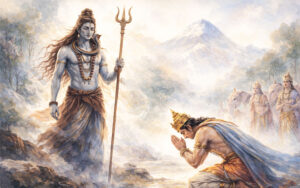
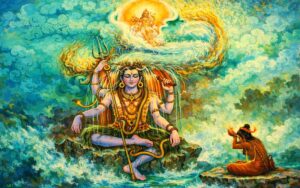
Once, the gods grew proud of their powers. They believed they governed nature and life. To humble them, Shiva manifested as an infinite pillar of light — the boundless Jyotirlinga — beyond their comprehension.
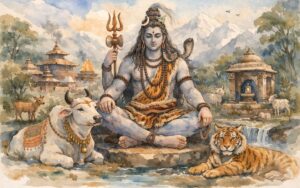
Unable to grasp his true nature, the gods were humbled. Shiva then withdrew into the forests, assuming the form of a wandering ascetic surrounded by wild creatures. Deer, serpents, and bulls gathered around him, recognizing him instinctively as their master.
From that moment, he came to be known as Pashupati — the Lord whom even nature obeys.
The Nepal Connection
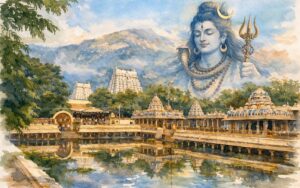
The most revered manifestation of this form stands at the sacred Pashupatinath Temple in Kathmandu, Nepal.
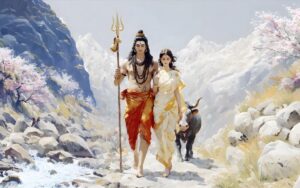
According to legend, Shiva and Parvati once wished to retreat from divine responsibilities. Taking the form of deer, they wandered into the serene forests of the Kathmandu valley. When the gods discovered them and attempted to bring Shiva back, he vanished into the earth.
Later, a divine linga emerged at that very spot. This linga is unique — it bears four faces, facing the four cardinal directions, symbolizing Shiva’s all-seeing presence as Pashupati.
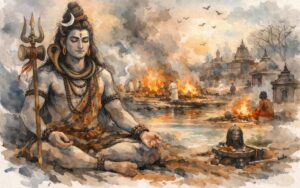
The temple stands along the Bagmati River, where cremation rituals take place. It is a powerful reminder that Pashupati governs not only life, but death and liberation as well.
The Deeper Meaning of “Pashu”
In Shaivite philosophy, particularly in texts like the Pashupata Sutra, the word “Pashu” carries a deeper meaning. It does not merely refer to animals. It refers to bound souls — beings trapped in ignorance, ego, attachment, and illusion.
In this sense, Shiva as Pashupati is the liberator. He is the one who frees souls from bondage and leads them toward awakening.
He is not merely the lord of creatures. He is the guide of consciousness.
Symbolism of Pashupatinath
The imagery surrounding Pashupati carries layered meaning:
Surrounded by animals — harmony between humans and nature
Crescent moon — mastery over time
Serpents — control over fear and death
Nandi the bull — devotion and dharma
Cremation grounds — detachment from worldly illusion
In this form, Shiva stands beyond civilization and ritual pride. He belongs to forests, mountains, and cremation grounds — and to every being that breathes.
As Pashupatinath, Shiva reminds us that no life is insignificant and no soul is beyond redemption.
In his quiet, watchful presence, every bound being finds the promise of liberation.