By
By 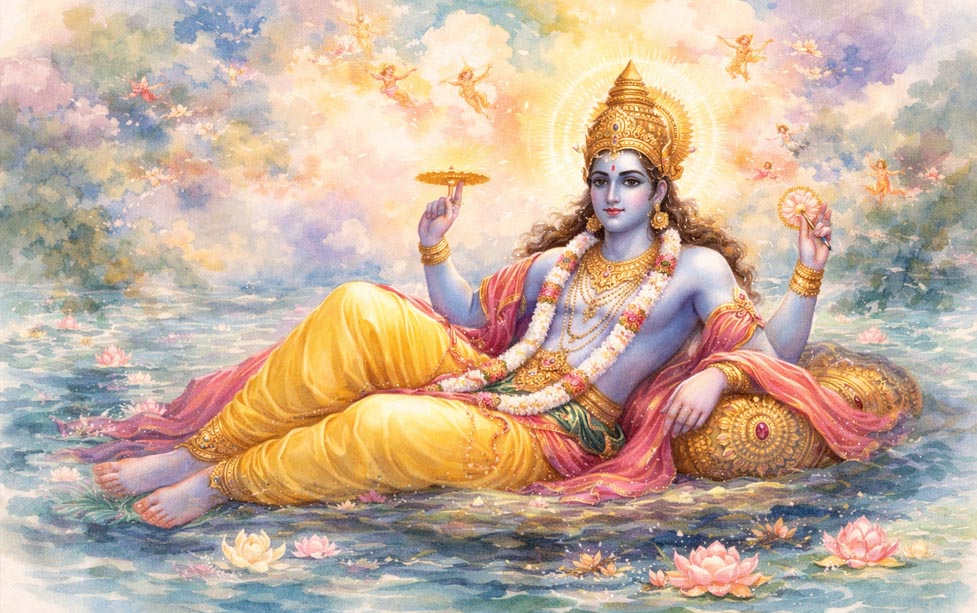
Tune in on Spotify for a deeper exploration of this blog in Hindi and English.

Vishnu’s avatars aren’t just divine appearances. They are carefully chosen expressions of the same truth, shaped by what the world needs at that moment.
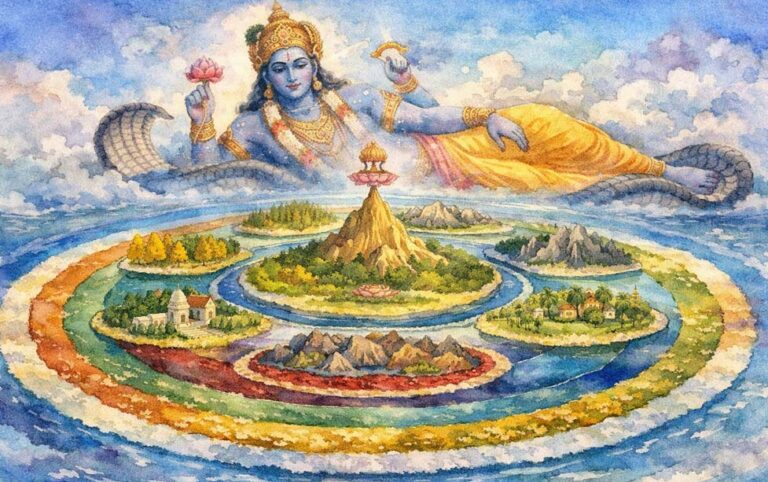
Hindu philosophy doesn’t treat the idea of divine incarnation as one-dimensional. When Bhagavan Vishnu takes form, it isn’t always in the same way or with the same intensity. Sometimes He appears subtly, sometimes fully, and sometimes through another being altogether.
What this really means is that divinity adapts to the situation. The form changes, but the purpose stays the same: to restore balance, protect dharma, and guide creation forward.
Let’s break down the six types of Vishnu’s avatars in a way that actually makes sense.
Partial Incarnations (Aṁśāvatāra)
These are the most subtle forms of incarnation.
Here, Vishnu doesn’t manifest fully. Instead, only a small portion of His divine qualities appears in a being. Think of it as a spark rather than the full flame.
These incarnations usually contribute quietly, shaping knowledge, creation, or spiritual direction rather than dramatic intervention.
Examples:
Marichi – One of the Saptarishis, representing Vishnu’s creative intelligence at work in the universe.
Rishabha – A king who emphasized renunciation and dharma, guiding humanity toward spiritual discipline.
Parts or Fractional Incarnations (Aṁśa Avatāra)
This is a step up in intensity.
Here, a larger portion of Vishnu’s divine power is expressed. These forms actively participate in cosmic functions like creation, protection, or restoration.
Examples:
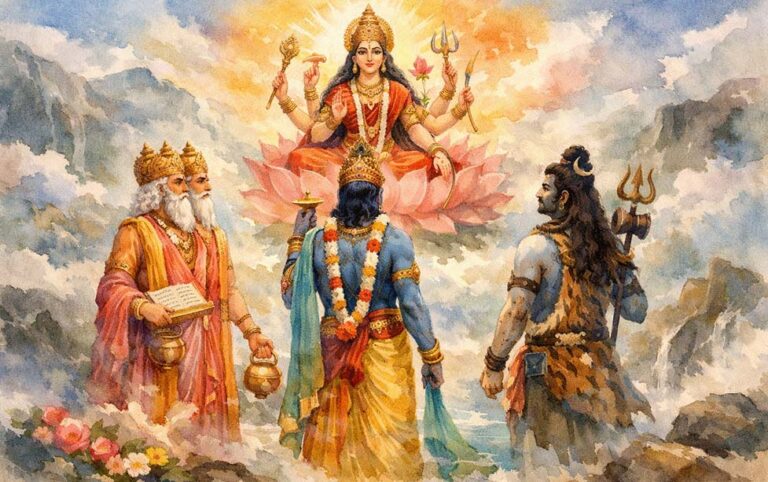
Brahma – Often understood as an aspect through which Vishnu performs the act of creation.
Varaha – The powerful boar incarnation who lifted the Earth from the depths after it was submerged by the demon Hiranyaksha.
These avatars are more visible in action and play critical roles in maintaining cosmic order.
Empowered Incarnations (Āveśa Avatāra)
Now this is where things get interesting.
In these cases, Vishnu doesn’t “become” the individual. Instead, He empowers an existing being with divine energy for a specific mission.
It’s less about incarnation and more about divine infusion.
Examples:
Parashurama – A warrior sage granted the power to restore balance by eliminating corrupt rulers.
Narada – The ever-traveling sage who spreads devotion, wisdom, and sometimes even triggers events that lead to greater cosmic outcomes.
These avatars show that divinity can work through individuals, not just as them.
Aspect Incarnations (Kalāvatāra)
These incarnations represent specific aspects or qualities of Vishnu.
They appear across different ages (yugas), each time emphasizing a particular dimension of the divine—whether it’s wisdom, stability, or support.
Examples:
Kapila – The founder of Samkhya philosophy, representing deep spiritual knowledge and analytical understanding of reality.
Kurma – The tortoise incarnation who supported Mount Mandara during the churning of the ocean, symbolizing stability and silent strength.
These forms remind us that sometimes the most powerful role is simply to support.
Complete Incarnations (Pūrṇa Avatāra)
Here, Vishnu manifests with all His divine qualities fully present.
These avatars are central to major epics and carry out powerful, world-changing actions. Yet, they still operate within a defined role or purpose.
Examples:
Nrisimha – The fierce man-lion form who protected Prahlada and destroyed Hiranyakashipu, showing that divine protection can take any form.
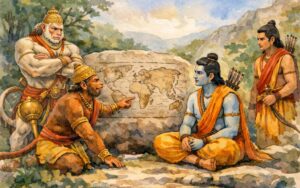
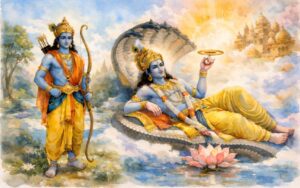
Rama – The ideal king of Ayodhya, embodying dharma, discipline, and moral perfection throughout the Ramayana.
These are the avatars most people are familiar with—fully divine, yet deeply human in their journeys.
The Most Complete Incarnation (Paripūrṇatama Avatāra)
This is the highest expression of incarnation.
In this form, Vishnu doesn’t just manifest fully—He expresses the entire spectrum of divinity: love, wisdom, playfulness, power, and cosmic authority.
Example:
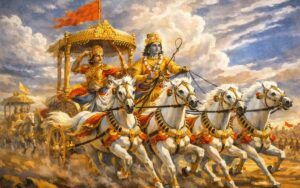
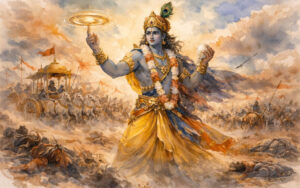
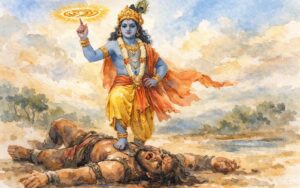
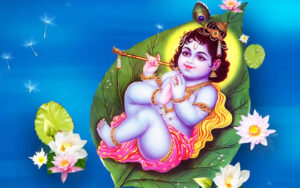
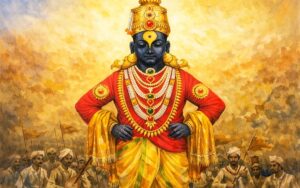
Krishna – The central figure of the Mahabharata and the speaker of the Bhagavad Gita. His life spans everything from divine play (leela) to profound spiritual teaching and ultimate cosmic revelation.
Krishna is not just an avatar. He is the complete experience of the divine in human form.
Final Thought
Here’s the thing: these six types of avatars aren’t just classifications—they’re a way to understand how the divine interacts with the world.
Sometimes subtly.
Sometimes forcefully.
Sometimes through others.
And sometimes in full presence.
What this really shows is that Vishnu’s role isn’t fixed. It evolves with the needs of the universe.
And that idea, more than anything, is what makes these stories timeless.
Each type of avatara reveals a different way the divine steps in—sometimes quietly, sometimes powerfully, but always with purpose.
Understanding these forms helps us see that dharma isn’t preserved in just one way, but through many expressions of the same eternal force.