By
By 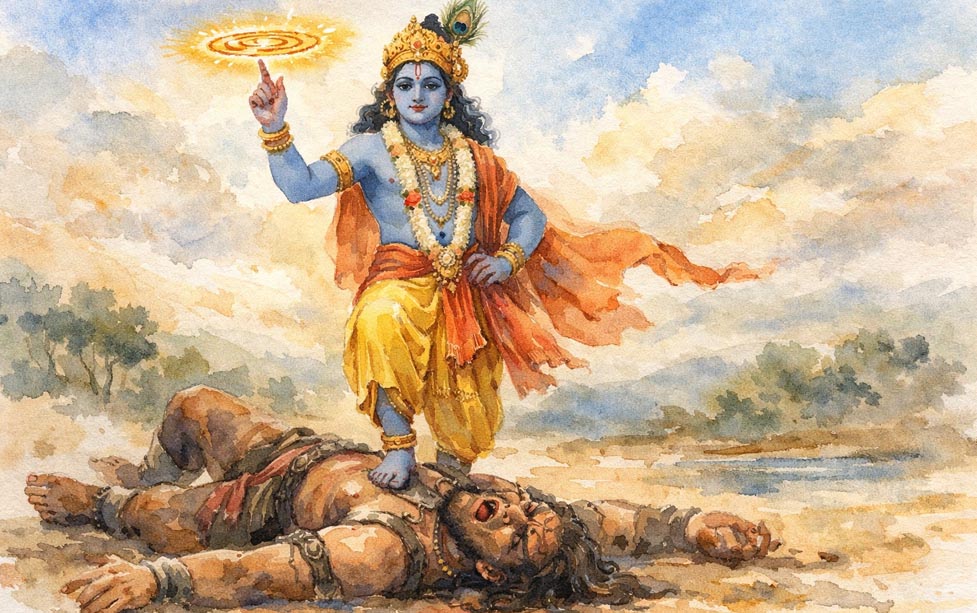

Characters in the story:
Lord Krishna: Lord Krishna is one of the most popular and revered deities in Hindu mythology. He is worshiped as the eighth avatar of Lord Vishnu and is known for his divine teachings in the Bhagavad Gita and for his role in the epic Mahabharata.

Satyabhama: Satyabhama is one of the wives of Lord Krishna, known for her strong personality and devotion towards her husband.
Narakasura: Narakasura is a powerful demon king mentioned in Hindu scriptures known for his tyranny and evil deeds, ultimately defeated by Lord Krishna and Satyabhama in a divine battle.
Mura: Mura was a very powerful demon who served as a general in Narakasura’s army.
Bhudevi: Bhudevi is a Hindu goddess and is considered the personification of Mother Earth. She is often depicted as a woman with a green complexion and is worshiped for her fertility and abundance.

Krishna has many names, and each one tells a story. Some names highlight his divine qualities, while others come from significant events in his life.
The name Murari refers to Krishna as the slayer of the demon Mura. The story behind it is dramatic and full of meaning.
The Rise of Narakasura
The tale begins with Narakasura, the son of Bhumi Devi, the goddess of Earth. In some traditions, he is also associated with Vishnu from a previous age, which gave him great potential and divine blessings. However, power slowly corrupted him.
Narakasura received a powerful boon from Lord Brahma. According to this blessing, he could only be killed by his mother. Believing that such a fate was impossible, Narakasura became arrogant. His ambition soon turned into cruelty.
He conquered kingdoms, harassed sages, and spread fear across the three worlds. Thousands of women were imprisoned in his palace. To make matters worse, he even stole the celestial earrings of Aditi, the mother of the gods. Unable to bear his tyranny any longer, the gods sought Krishna’s help.
Krishna Prepares for Battle
Krishna agreed to fight Narakasura, but the boon from Brahma complicated matters. Since Narakasura could only be defeated by his mother, the solution had to come from divine wisdom, not just strength.
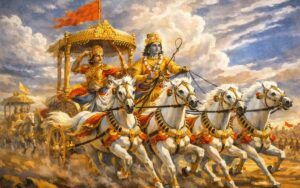
Krishna’s consort Satyabhama was believed to be an incarnation of Bhumi Devi. Therefore, Krishna asked Satyabhama to join him in battle. She rode with him and played a crucial role in the confrontation that followed. This moment also highlights a deeper theme in Hindu tradition: divine action reaches its full potential when the divine masculine and feminine unite.
Krishna explains this purpose in the Bhagavad Gita:
“For the protection of the righteous, for the destruction of the wicked, and for the establishment of dharma, I manifest myself age after age.” (Bhagavad Gita 4.8)
The Demon Mura Appears
Before Krishna could confront Narakasura, another powerful enemy blocked his path. Narakasura’s capital was guarded by a fierce demon named Murasura, often described as a warrior with five heads and immense power.
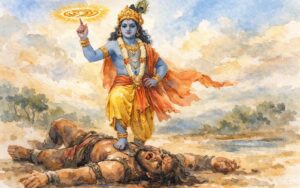
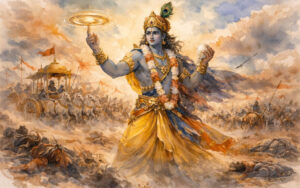
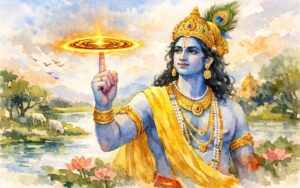
Mura attacked Krishna with powerful weapons and magical strikes. The battle was fierce, but Krishna remained calm and countered every attack with ease. Finally, he released his Sudarshana Chakra, the divine discus that symbolizes his supreme power.
With one decisive strike, the Sudarshana Chakra cut through the air and severed Mura’s five heads. The demon fell instantly, and the heavens erupted in celebration.
From that moment, Krishna became known as Murari, meaning “the enemy or slayer of Mura.”
Related stories:
The Triumph of Light: Satyabhama’s Battle Against Narakasura
Krishna’s 16,000 Wives Explained: Myth, Meaning, and Dharma
The Meaning Behind the Story
Stories from the Puranas often carry deeper meanings beyond the events themselves. In this tale, the demon Mura symbolizes the inner enemies that disturb the human mind — anger, pride, greed, fear, and delusion.
Krishna’s defeat of Mura represents the triumph of wisdom and divine grace over these destructive traits. Narakasura, on the other hand, symbolizes unchecked ego and power that ultimately lead to downfall.
Satyabhama’s role reminds us of the importance of Shakti, the divine feminine energy that completes and empowers divine action.
The Name Murari
For devotees, the name Murari is more than a reminder of an ancient battle. It reflects Krishna’s role as the protector of righteousness and the destroyer of forces that disrupt harmony in the world.
When devotees chant the name Murari, they remember the Lord who dispels inner darkness and restores balance. It is a name that carries both strength and compassion — a reminder that divine power exists to protect and uplift the world.