
 By
By 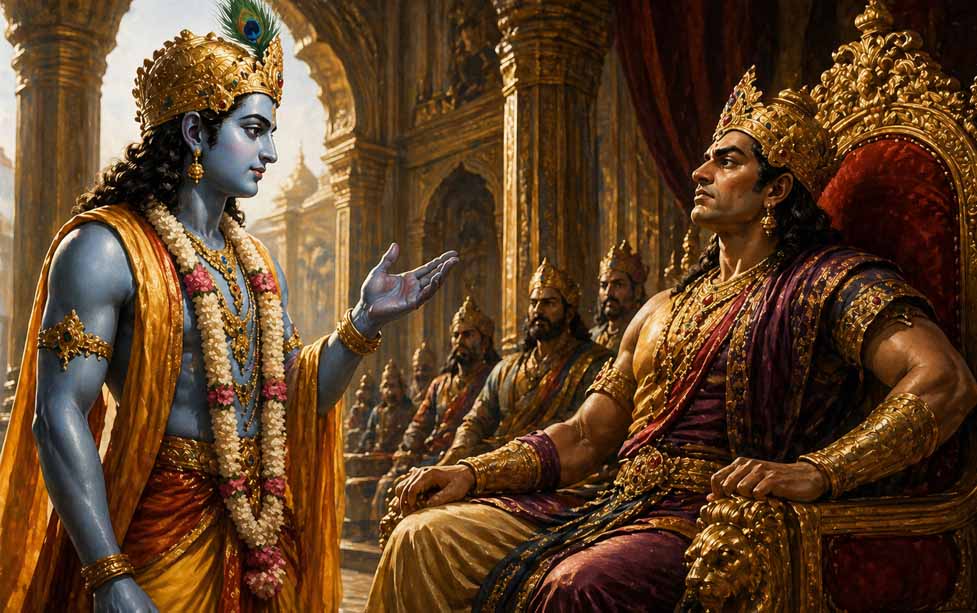
Tune in on Spotify for a deeper exploration of this blog in Hindi and English.

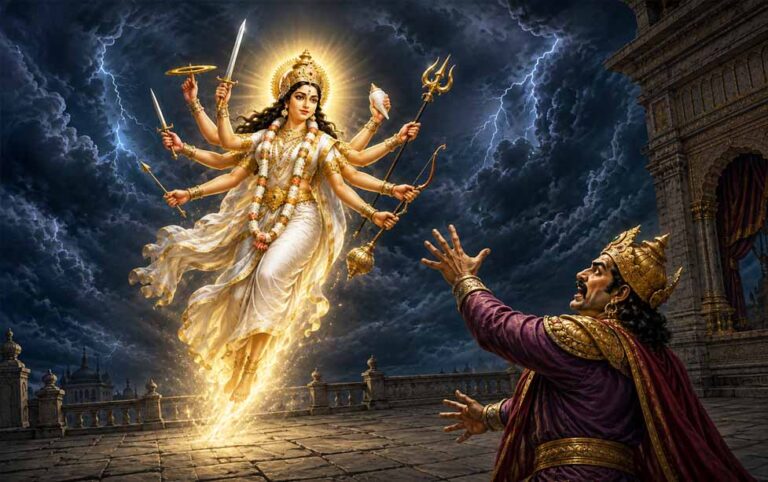
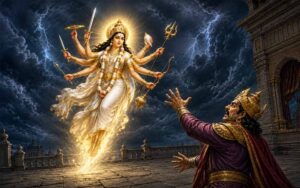
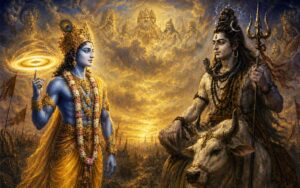
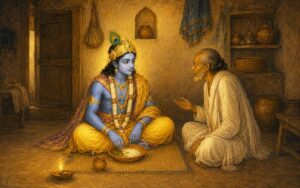
In the royal court of Hastinapura, Krishna stood before Duryodhana with one final chance for peace, but what followed revealed the dangerous power of pride over wisdom.
Some of the most dangerous people are not those who cannot recognize right from wrong. They are the ones who recognize it clearly and still choose against it.
In the great epic of the Mahabharata, few moments expose this truth more brutally than the conversation between Krishna and Duryodhana. It was a moment that revealed the real reason behind the destruction of an entire dynasty.
A Prince Who Knew the Truth
Duryodhana is often remembered as arrogant, jealous, and power-hungry. But his most disturbing trait was something far deeper.
He knew the truth.
He understood dharma. He knew the Pandavas had been wronged. He knew greed and hatred were consuming him. He even understood that his choices would eventually destroy his family and kingdom.
Yet he could not stop himself.
In one of the most haunting admissions attributed to Duryodhana in the Mahabharata, he says:
जानामि धर्मं न च मे प्रवृत्तिः ।
जानाम्यधर्मं न च मे निवृत्तिः ॥
Jānāmi dharmaṁ na ca me pravṛttiḥ
Jānāmy adharmaṁ na ca me nivṛttiḥ
“I know what dharma is, yet I cannot bring myself to follow it.
I know what adharma is, yet I cannot turn away from it.”
This was not ignorance. This was surrender to ego, desire, and inner weakness.
That is what made Duryodhana tragic. He was not blind to righteousness. He was simply unwilling to let go of the part of himself that opposed it.
When Krishna Tried to Prevent the War
Before the great war of Kurukshetra began, Krishna came to the Kaurava court as a peace messenger.
He asked for compromise. Not a kingdom. Not revenge. Just enough land for the Pandavas to live with dignity.
But Duryodhana refused completely. His pride had grown larger than reason itself.
Krishna spoke with wisdom, patience, and clarity. He warned that war would destroy families, kingdoms, and generations.
Duryodhana listened.
And rejected every word.
That was his greatest weakness: not lack of intelligence, but refusal to surrender his ego.
The Psychology Behind Duryodhana’s Fall
Duryodhana’s struggle is deeply human.
Many people know the right thing to do:
- apologize instead of escalating
- let go of jealousy
- act with integrity
- control anger
- step away from destructive ambition
Yet knowledge alone is not enough. Desire, insecurity, ego, and resentment can overpower wisdom.
Duryodhana became a man who justified his emotions until they became his identity.
And once ego becomes identity, truth starts to feel like an enemy.
Why This Conversation Still Matters Today
The dialogue between Krishna and Duryodhana remains timeless because it reflects a battle that exists inside every person.
The conflict between:
- wisdom and impulse
- humility and pride
- duty and desire
- self-awareness and self-control
Duryodhana teaches us that knowing the truth is meaningless without the courage to live by it.
Krishna’s warnings were not ignored because they were unclear. They were ignored because Duryodhana loved his ego more than truth.
The fall of Duryodhana did not begin on the battlefield of Kurukshetra. It began much earlier in the moment he recognized dharma but refused to follow it.
That is what made him tragic. And that is what makes his story unforgettable.

This now becomes a powerful reminder of the simplest way to become dear to Krishna,
Humility 🙏