By
Listen to the podcast on Spotify for a deeper dive into this story.

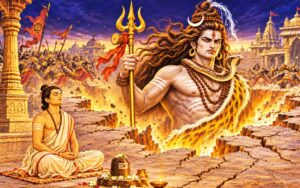
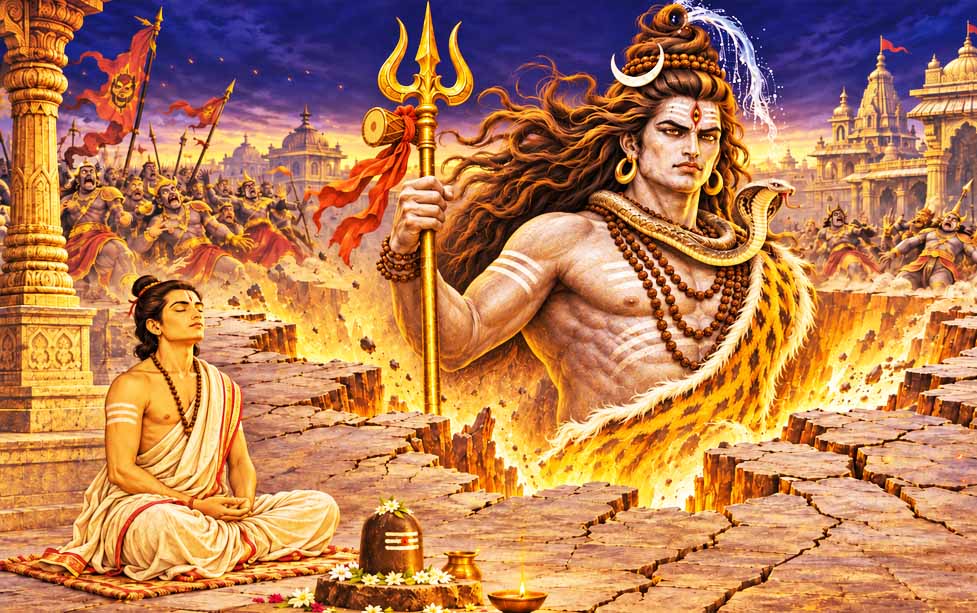
A demon's army surrounded the city of Avanti. Four brothers sat down to pray to a clay Shiva linga. Then the ground split open.

Avanti, the city now called Ujjain, was a city of Vedic learning. In the Shiva Purana’s Koti Rudra Samhita, a brahmin named Vedapriya lived there. He kept the sacrificial fires and worshipped Shiva every day. His four sons, Devapriya, Priyamedha, Sukrita and Dharmavahin, followed him in everything. The text says the whole city glowed with their merit.
Far away, on a hill called Ratnamala, lived an asura named Dushana. Brahma’s boons had made him arrogant. He defeated the gods and drove them from their places, and Vedic rites stopped wherever his reach extended. Avanti was still holding out. Dushana marched on it with a vast army and sent four daityas to besiege the four quarters of the city. His demand was simple. The brahmins must give up Shiva’s worship and the Vedic rites, or die.
The townspeople ran to the brothers in panic. The brothers answered plainly. They had no army and no weapons, only Shiva. So they made a linga out of earth, worshipped it, and sat down in meditation. When Dushana shouted for them to be bound and killed, they did not hear him. Their eyes were closed.
How did Shiva become Mahakala in Ujjain?
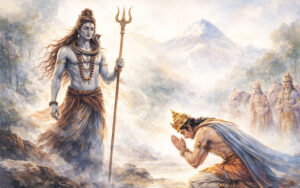
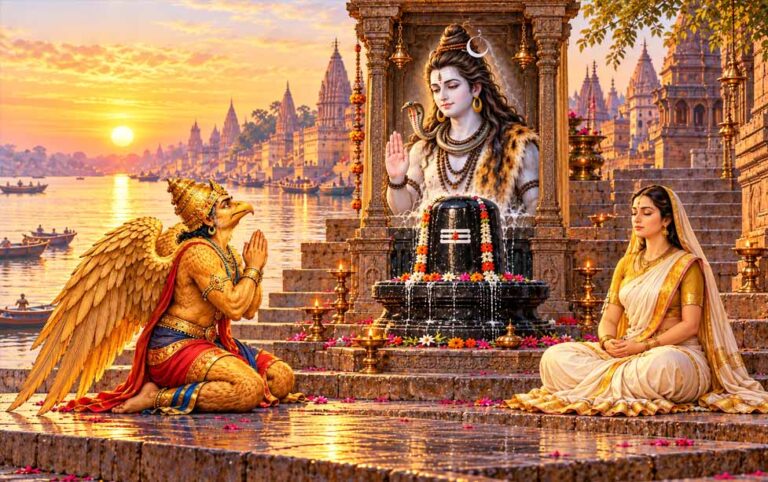
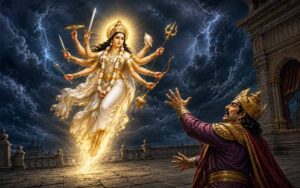
The ground near the earthen linga caved in with a loud report. Shiva rose out of the chasm in a terrifying form and named himself: “I am Mahakala.” He ordered Dushana to leave the brahmins alone. Then he reduced Dushana and his army to ashes with a single sound of “Hum.” Part of the army fled. The gods, including Vishnu and Brahma, arrived to watch.
Shiva offered the brothers a boon. They asked for liberation from worldly existence, and for one more thing: that he stay in Avanti and protect everyone who came to see him. Shiva remained in the chasm from which he had risen. The ground around the linga became sacred space in all four directions. He became famous as Mahakaleshwar, and the brothers attained liberation.
Chapter 17 tells a second story about the same shrine. King Chandrasena of Ujjayini, a devotee of Mahakala, wore the Cintamani jewel, a gift from the Shiva gana Manibhadra. Rival kings besieged his city to take it.
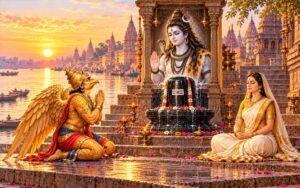
A cowherd’s young son watched the king worship and copied him with a pebble. His angry mother threw the pebble away. The boy collapsed in grief, and when he woke, a golden temple of Mahakala stood where his camp had been. The besieging kings gave up. Hanuman appeared and announced that Krishna would be born in the boy’s line, in the eighth generation, to the cowherd Nanda.
What does the Skanda Purana say about Ujjain’s sacred geography?
The Shiva Purana gives the moment of arrival. The Skanda Purana’s Avanti Khanda gives the map. It opens by invoking Sri Mahakala as the first lord of all the worlds, and its chapters cover Mahakalavana, Kanakasringa, Kushasthali, Avanti, Ujjayini, Padmavati, Kumudvati, Amaravati, Visala and Pratikalpa. Ujjain, in this text, is a city that carries many names, and each name has its own story.
Avanti comes from a root meaning “to protect,” because the city sheltered the seeds of gods and other beings through every Kalpa. Ujjayini comes from victory: the gods worshipped Camunda to win against the daitya Tripura, and the city took that name from that day.
FAQ
Which Purana says how Mahakaleshwar came to Ujjain?
The Shiva Purana, Koti Rudra Samhita, chapter 16, with a second story in chapter 17. The Shata Rudra Samhita’s summary of the twelve jyotirlingas also names Dushana and Ujjayini.
Who was Dushana?
An asura who lived on Ratnamala hill and had received boons from Brahma. He attacked Avanti to stamp out Vedic rites and Shiva worship.
Why is Shiva called Mahakala here?
In the text, Shiva names himself Mahakala as he rises from the chasm. Kala means both time and death.
Why is the city called Ujjayini?
The Skanda Purana derives it from a root meaning “to conquer,” tied to the story of Tripura.
Was Mahakala worshipped at Ujjain before the Shiva Purana story?
Some scholars note that early texts like the Harivamsa treat Mahakala as a gana of Shiva, and conclude he may have begun as a local deity. The Puranic accounts present him as Shiva himself.
Dushana brought an army to Avanti. The brothers brought clay and closed eyes.
The ground split, and the god who rose from it never left.