
 By
By 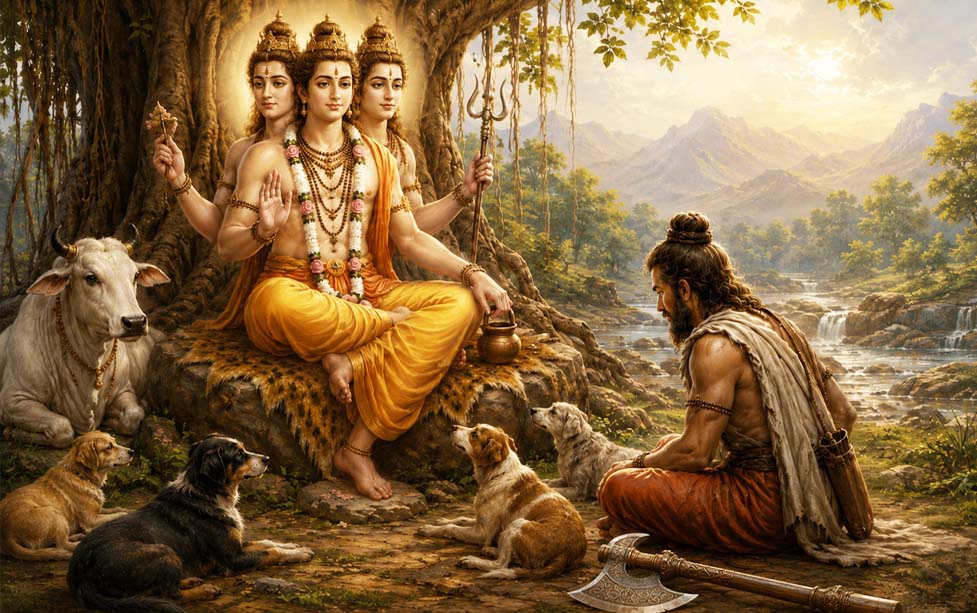
Tune in on Spotify for a deeper exploration of this story in Hindi & English.

Parashurama, who killed twenty-one times, finally faced an enemy his axe could not touch: his own mind, and Bhagwan Dattatreya helped him find the one part of himself that war had never reached.
Characters in the story:
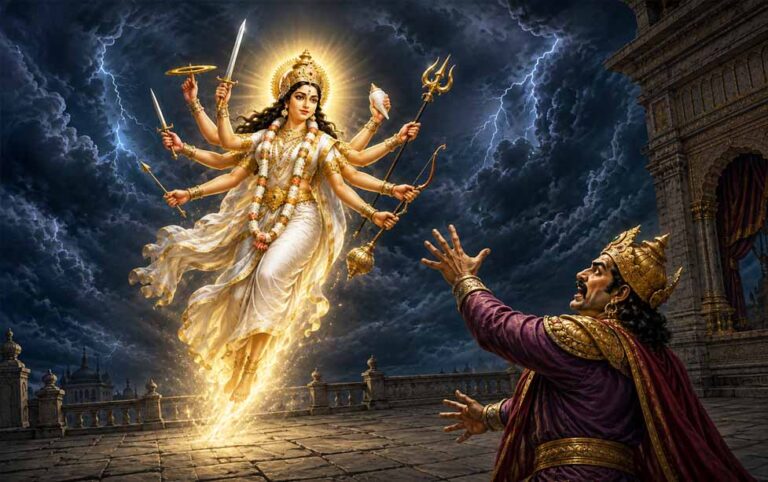
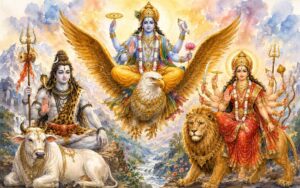
Goddess Lalita Tripura Sundari: Goddess Lalita Tripura Sundari is the manifestation of Goddess Shakti, symbolizing cosmic harmony and grace. She embodies the ultimate divine expression, transcending human understanding with her indescribable power and allure

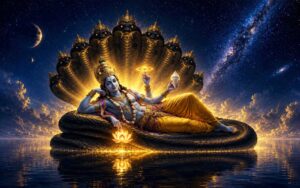
Lord Dattatreya: Lord Dattatreya is a revered deity in Hinduism, embodying the trinity of Brahma, Vishnu, and Shiva, symbolizing the ultimate union of creation, preservation, and destruction within the divine.
Parashurama: Parashurama is an iconic figure in Hindu scriptures, known as the sixth incarnation of Lord Vishnu, wielding an axe and revered as the warrior sage who eradicated evil from the Earth.

Parashurama had lived his whole life as a weapon. Twenty-one times he had swept across the earth, killing the cruel kings who had grown arrogant, avenging his father Jamadagni’s death.
The rivers ran red, and dharma seemed restored. But peace did not follow. Even with his vow fulfilled, a restless fire stayed inside him, a heaviness victory could not lift. He wandered through forests and mountains, unable to eat or sleep, searching for a cure to a grief he could not name.
The Meeting on Mount Gandhamadana
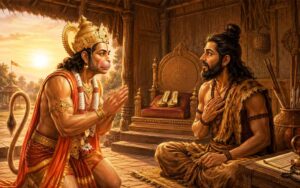
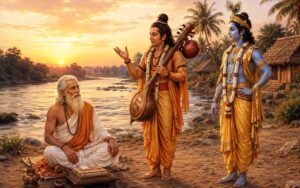
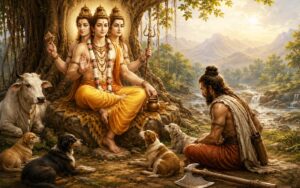
His path led him to the slopes of Mount Gandhamadana, to a quiet glade beneath a sacred audumbara tree. There sat Dattatreya, the wandering sage born of Atri and Anasuya, carrying the combined nature of Brahma, Vishnu, and Shiva.
Parashurama, a warrior feared across the earth, felt small before this man’s stillness.
For seven days and nights, the two sat together without a single word passing between them. Yet something was exchanged in that silence, a kind of understanding that did not need language to travel from one mind to another.
Through those seven days, Parashurama felt old burdens loosening, not through argument, but simply through sitting near someone who carried none of that weight himself.
Why the Teaching Is Called Tripura Rahasya
When Dattatreya finally spoke, on the eighth day, the teaching he gave Parashurama took its name from the very goddess at its center.
Tripura Rahasya means the secret, or hidden mystery, of Tripura, the goddess known as Tripura Sundari. The text is structured as Dattatreya slowly unveiling who she really is, not as a distant deity to worship, but as the name for awareness itself.
The text is structured as Dattatreya slowly unveiling who she really is, not as a distant deity to worship, but as the name for awareness itself.
The text traditionally consists of three sections: Jñāna Khaṇḍa: The section on supreme wisdom and self-realization (the most widely studied portion). Mahātamya Khaṇḍa: The section detailing the greatness and glory of the Devi. Karyā Khaṇḍa: The section on conduct and spiritual practice (which is now considered untraceable/lost).
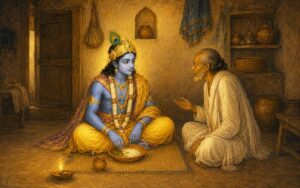
Dattatreya did not answer Parashurama’s grief directly. He told him instead the story of a king named Hemachuda and his wife Hemalekha, a woman who already understood what Parashurama was searching for and had taught it to her own husband through patient reasoning.
Hemalekha would not let her husband give up the world the way he wanted to. She told him that giving up things outside himself meant nothing if his mind stayed unexamined. Through her teaching, Hemachuda came to see that being trapped or being free are not conditions imposed from outside. They depend on how the mind perceives. And behind every kind of perception sits one unmoving awareness.
This is Tripura Sundari, the witness behind the three ordinary states of being awake, dreaming, and in deep sleep, each one a condition the mind believes it is fully contained within.
The Fourth State
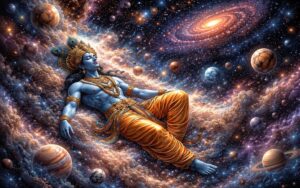
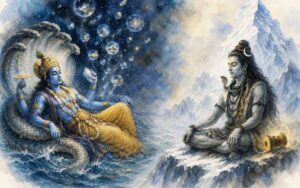
Dattatreya carried the teaching further. He guided Parashurama to directly notice four states, not three: waking, dreaming, deep sleep, and a fourth, turiya, the awareness that quietly watches the other three come and go.
This fourth state is where Tripura Sundari is said to truly reside, as the silent ground on which all three states are projected. To know her, in this text, is to recognize that ground in oneself.
He explained it simply. Water can become ice, or steam, or stay liquid, but its essential nature never changes. In the same way, awareness takes the shape of waking, dreaming, and sleep, without ever losing its own unchanging nature.
Dattatreya taught Parashurama to stay alert in the gap between one state and the next, especially in the thin moment between waking and falling asleep, where the ordinary sense of being someone briefly comes apart, and where the presence of Tripura Sundari, stripped of mythology, can actually be felt as nothing other than one’s own awareness.
What This Gives Parashurama
Slowly, Parashurama found the witness beneath all his experience, the one part of him that battle had never touched, because it had never been a warrior, a son, or an avenger in the first place.
The suffering he had carried was never really about the killings. It came from believing he was a fixed, separate person, rather than a temporary shape taken by this same unchanging awareness that the text calls Tripura Sundari.
His grip on the past loosened. The memories of war lost their pull. The axe that had once been his only purpose became, in his hands, just an old object, a reminder of how much energy anger can demand and how little it gives back.
He set down the path of conquest and took up a quieter one, becoming a teacher who would go on to instruct warriors like Bhishma, Drona, and Karna, no longer from a place of vengeance, but from dharma.
Tradition remembers him as Chiranjivi, one who remains, still teaching the same lesson he once had to learn from someone else’s stillness.
FAQs
Is this story about Parashurama found in older Puranas, or only in the Tripura Rahasya?
The Tripura Rahasya is the main source for this account. Parashurama appears across many Puranas as a warrior, but his despair, his meeting with Dattatreya on Mount Gandhamadana, and the teaching that follows belong specifically to this text, which leans more philosophical than the typical Purana and is usually dated to the medieval period.
What does the name Tripura Rahasya actually mean?
It translates roughly to the secret or mystery of Tripura, referring to Tripura Sundari. The text is built around Dattatreya gradually revealing the deeper meaning of who she is to Parashurama, treating her not as an external goddess but as the name for awareness itself.
Who is Hemalekha, and why does she teach instead of Dattatreya?
Hemalekha is a queen in a story Dattatreya tells to Parashurama. She teaches her husband Hemachuda the truth of non-duality through careful argument. Dattatreya uses her story as a teaching tool rather than explaining things directly himself, a method common in Sanskrit philosophical texts.
What is the fourth state of consciousness Dattatreya describes?
Beyond waking, dreaming, and deep sleep, Dattatreya points to a fourth state called turiya, the constant awareness that silently witnesses the other three without itself changing. This is where Tripura Sundari is said to truly reside.
Parashurama came looking for an end to his guilt and instead found the one part of himself the guilt had never reached.
The axe stays part of his story. The man who once needed it does not.


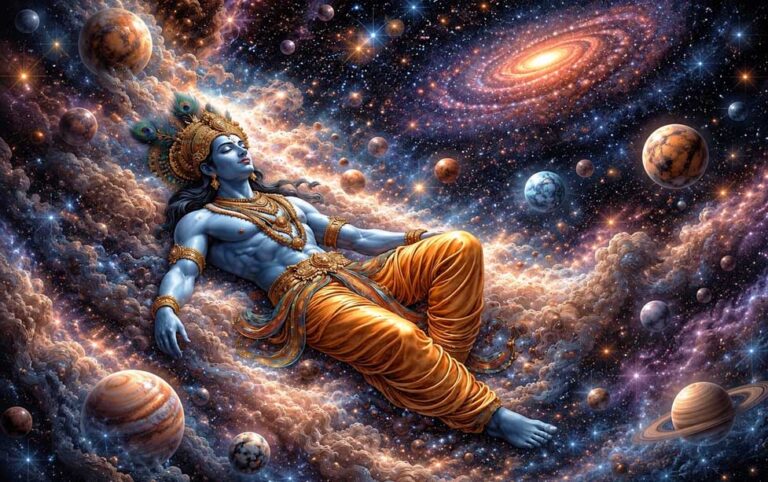

And it is in this state, Turiya, one can be closest to , and be one with, the divine Maa, the supreme, Maa Tripura Sundari 🙏
Explained n narrated most beautifully, lucidly, and true to the original text pl … may the ParamPujya Paramhamsa Swamiji Gurudeva and the Divine Mother ever remain so Blissful, Gracious and Supreme Guide … at each n every stage n step … of all his (the author) endeavours … professional, academic, personal n spiritual … towards a all fulfilling … long n healthy … life on this beautiful Mother Earth along with the family, extended families and friends pl … Om Tat Sat Om …